Crawl Space Mold and Mildew: What You Need to Know Before Calling Anyone
Crawl space mold is one of the most common reasons homeowners call encapsulation contractors - and one of the most frequently misrepresented. The important distinction: encapsulation prevents future mold by eliminating moisture; it does not kill existing mold. If you have active mold colonies on your floor joists or subfloor, you need remediation first, encapsulation second.
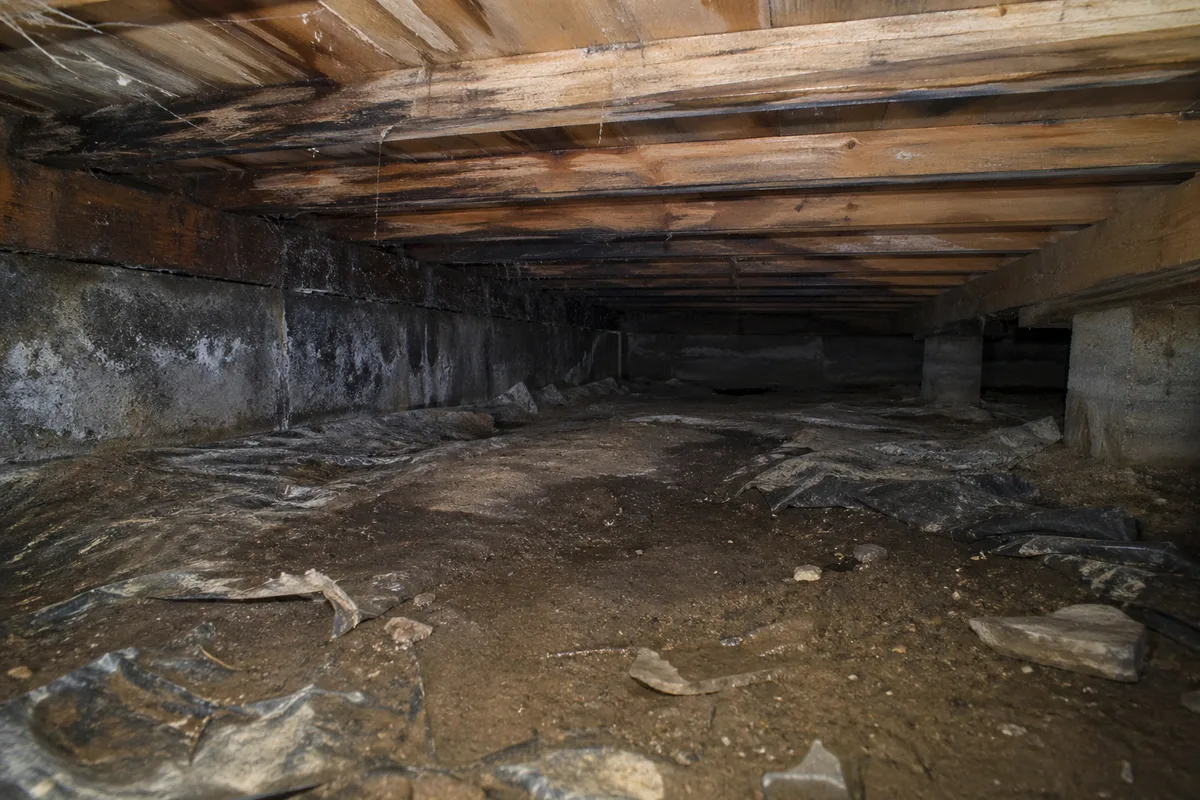
Why Crawl Spaces Get Moldy
Mold requires three things: organic material (wood), moisture (above 70% relative humidity sustained over time), and temperatures above freezing. As the EPA's mold course explains, mold grows wherever moisture is available on an organic surface, which is why moisture is the one input you can realistically remove. Crawl spaces in the Southeast US are basically a perfect mold incubator during summer months: warm, humid, with wood floor joists and subfloor directly overhead.
The moisture usually comes from one of three sources:
- Ground evaporation: Bare soil continuously releases moisture vapor upward. In summer, this alone can push crawl space humidity above 80%.
- Vented outside air: Warm, humid outdoor air enters through foundation vents, cools on contact with the crawl space surfaces, and condenses.
- Water intrusion: Rain or groundwater entering through foundation cracks, improperly graded soil, or a high water table.
What Encapsulation Actually Does to the Mold Problem
Encapsulation - specifically, sealing the vapor barrier to walls, closing vents, and installing a dehumidifier - eliminates sources 1 and 2 above. Without sustained high humidity, new mold cannot establish itself or grow.
What it does not do: kill or remove existing mold. A vapor barrier installed over active mold growth will seal in organic material and trap any residual moisture underneath it. Mold can continue growing in that environment. This is why the correct order of operations is:
- Diagnose the extent and type of mold (visual inspection + air quality or swab sample if needed)
- Remediate existing mold (professional treatment of affected wood surfaces)
- Fix any active water intrusion if present
- Install encapsulation system to prevent recurrence
How to Know If You Have a Mold Problem
Signs that warrant a crawl space inspection:
- Musty or earthy smell in your home, especially near floors or air vents
- Dark staining on floor joists or subfloor (can be mold, can also be dirt - need inspection to distinguish)
- Peeling or bubbling floor finishes
- Allergy or respiratory symptoms that improve when you leave home
- A home inspector flagged mold or elevated moisture in a recent report
What you should not rely on: a contractor's visual "mold identification." Contractors have a financial incentive to find mold. An independent air quality test ($200–$400) or a surface swab test sent to an accredited lab gives you unbiased data before you spend $1,500+ on remediation.
Mold Remediation Costs
| Scope | Typical Cost | Notes |
|---|---|---|
| Minor surface mold (limited area) | $500–$1,500 | HEPA vacuuming + antimicrobial treatment |
| Moderate coverage (multiple joists) | $1,500–$3,500 | Sanding + encapsulant coating on wood |
| Severe / structural damage | $3,500–$10,000+ | May require joist sistering or replacement |
Remediation is a separate line item from encapsulation. Be wary of contractors who bundle them without itemizing - you deserve to know what you're paying for each phase.
After Remediation: Does Encapsulation Prevent Recurrence?
Yes - consistently, in peer-reviewed building science research and documented contractor case studies. When moisture is eliminated through proper encapsulation (vapor barrier + sealed vents + dehumidifier maintaining below 60% RH, matching the EPA's guidance to keep indoor relative humidity below 60%), mold cannot reestablish. Wood that has been properly remediated and is kept dry does not re-mold.
The dehumidifier is critical here. A vapor barrier alone, without active humidity control, reduces but does not eliminate moisture in humid climates. The dehumidifier is what makes the system actually work in NC, SC, TN, VA, and GA summers.