How to Encapsulate a Crawl Space Yourself: A Realistic DIY Guide
A DIY crawl space encapsulation project can save you $2,000–$4,000 compared to hiring a contractor - but only if your crawl space is physically accessible, has no active mold or water intrusion, and you're comfortable spending a weekend in a tight, dirty space.
Honest difficulty rating: Moderate to Hard
Physical demands are high (confined space, crawling on knees, dust/insulation). Technical difficulty is low. The job is slow, not complicated.
Before You Start: Go / No-Go Checklist
DIY encapsulation is appropriate if all of the following are true:
- Your crawl space has at least 18 inches of clearance (24"+ is much more manageable)
- There is no active mold requiring professional remediation
- There is no active water intrusion (standing water, water entering through walls)
- You do not need a dehumidifier with a new electrical circuit (that requires an electrician)
- Your foundation vents can be sealed without structural modification
If any of these are not true, get contractor quotes. The cost savings disappear quickly when remediation, electrical, or access complications enter the picture.
Materials List and Cost
| Item | What to Buy | Approximate Cost (1,500 sq ft) |
|---|---|---|
| Vapor barrier liner | 16-mil reinforced polyethylene, full coverage + 20% overage | $400–$700 |
| Butyl tape | 4" wide, at least 200 linear feet | $80–$150 |
| Termination bar | Aluminum, for attaching liner to walls | $60–$100 |
| Masonry anchors | Tapcon 3/16" or equivalent | $30–$50 |
| Vent covers (foam) | Rigid foam cut to fit each vent opening | $50–$120 |
| Drainage matting (optional) | Only if water intrusion is a risk | $200–$400 |
| Safety gear | N95 mask, knee pads, Tyvek suit, headlamp | $50–$100 |
| Total (no dehumidifier) | $870–$1,620 |
Where to buy: ACF Environmental, Crawl Space Depot, or Home Depot/Lowe's for materials. Buy from a specialty supplier for the liner - big box store liner is typically 6-mil, which is inadequate for a permanent installation.
Step-by-Step Installation
Step 1: Prepare the crawl space
Before laying any liner, the crawl space must be clean and ready. Remove all old vapor barrier material, debris, and organic material from the floor. If there's standing water, pump it out and wait for the soil to dry. Level any sharp gravel or rocks that could puncture the liner.
Inspect the floor joists and subfloor for visible mold. If you see mold covering more than a square foot or two, stop and get a professional assessment before proceeding.
Step 2: Install drainage matting (if needed)
If your crawl space has a history of water intrusion - even occasional - lay dimple board (drainage matting) before the liner. The textured side faces down, creating channels that direct water to a low point (ideally a sump pit). This protects the liner from water pressure and prevents the liner from floating in a wet event.
Step 3: Lay the vapor barrier
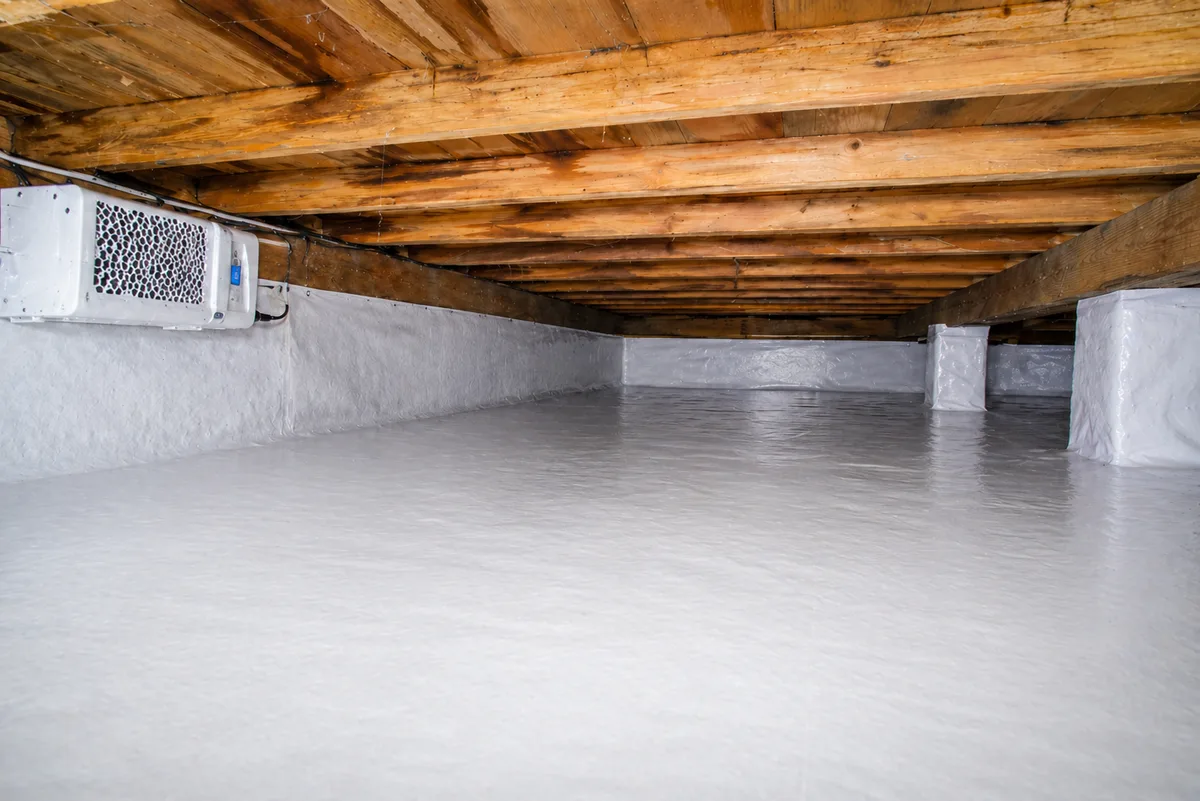
Start at one end and unroll the liner across the floor. Overlap seams by at least 12 inches - 18 inches is better. Wrap the liner around floor piers, cutting carefully and taping around the perimeter of each pier. Work toward the crawl space access opening so you're not stepping on freshly laid material.
Step 4: Seal all seams with butyl tape
Every overlap, every seam, and every penetration (pipes, piers, columns) must be sealed with 4-inch butyl tape. Do not use duct tape or regular plastic tape - they fail within a year. Butyl tape is specifically formulated to adhere to polyethylene and stay flexible in temperature extremes.
Press the tape firmly with a roller or your hand. Smooth out any air pockets.
Step 5: Run the liner up the walls
Bring the liner up each foundation wall at least 6 inches - ideally 12 inches. Some installers run it all the way to the sill plate. Attach it to the wall using a termination bar (a flat aluminum strip) fastened with masonry anchors every 12 inches. This is the most physically demanding part: you're working in a tight space, drilling into concrete block or poured concrete.
Step 6: Seal foundation vents
Cut rigid foam board (2-inch polyiso or XPS) to fit each vent opening. Install from the inside of the crawl space, securing with foam adhesive and sealing the perimeter with spray foam or butyl tape. This converts your vented crawl space to a closed one, which is required for the encapsulation to function in humid climates.
Note: Sealing vents may require a building permit in some jurisdictions. Check with your local building department before proceeding.
Step 7: Install a dehumidifier (strongly recommended)
A sealed crawl space without active humidity control can still accumulate moisture, especially during the first summer after installation. A commercial-grade crawl space dehumidifier - sized for your square footage, with a gravity drain or condensate pump - is the difference between a good system and a great one.
If your crawl space doesn't have a dedicated electrical circuit, hire an electrician for this part. A dehumidifier running on an overloaded circuit is a fire hazard.
What to Expect After Installation
In the first 2–4 weeks after installation, you may see a temporary increase in humidity as the system reaches equilibrium and residual soil moisture is pulled out. This is normal. After that, with a properly sized dehumidifier running, you should see relative humidity stabilize below 60% year-round.
Inspect the system annually: check for liner tears, seam lifting, dehumidifier filter condition, and any new water intrusion.
DIY Crawl Space Encapsulation Cost vs. Hiring a Contractor
The core reason most people ask "can I encapsulate my own crawl space?" is money. A professional job on a 1,500 sq ft crawl space typically runs $8,000 to $15,000. Doing the same work yourself brings the hard costs down to roughly $870 to $1,620 in materials (see the list above), plus a dehumidifier if you add one. The table below shows where the savings actually come from and where they quietly disappear.
| Line Item | DIY Cost | Contractor Price | Your Savings |
|---|---|---|---|
| Vapor barrier + seam sealing (materials) | $500–$900 | Included in bid | - |
| Wall termination + fasteners | $90–$150 | Included in bid | - |
| Vent sealing (foam board) | $50–$120 | Included in bid | - |
| Safety gear + tools | $50–$150 | N/A | - |
| Crawl space dehumidifier (optional) | $900–$1,800 | $1,500–$2,500 installed | $600–$700 |
| Labor (2-3 days of your own time) | $0 | $4,000–$8,000 | $4,000–$8,000 |
| Realistic total | $870–$1,620 (no dehu) | $8,000–$15,000 | $2,000–$4,000 net |
The headline savings look bigger than the number you actually pocket. A contractor bid bundles labor, a warranty, disposal, and sometimes a dehumidifier and drainage work. Strip out the parts a DIYer skips or does cheaply, and the realistic net saving on a clean, accessible crawl space is $2,000 to $4,000. For a full breakdown by square footage, see our encapsulation cost by size guide, and run your own numbers with the cost calculator. If you are still deciding, our DIY vs. professional comparison lays out the trade-offs side by side.
Caveats that erase the savings fast: renting or buying tools you do not own, a second liner order after a bad first cut, a dehumidifier circuit that needs an electrician, or any remediation. One professional mold job or a French drain can wipe out the entire DIY advantage. Read our full crawl space encapsulation cost overview before you commit.
Common DIY Mistakes That Cause Failure
Encapsulation is not technically hard, but it is unforgiving. A handful of shortcuts account for most failed DIY jobs. Here is what goes wrong and how to avoid each one.
Using an inadequate mil liner
The single most common mistake is buying 6-mil poly from a big box store because it is cheap. It tears under a knee, punctures on gravel, and degrades in a few years. Use a reinforced liner of at least 12-mil, ideally 16-mil or 20-mil, rated for crawl space use. Our vapor barrier guide explains the mil ratings and reinforcement types worth paying for.
Poor seam sealing
Overlapping seams without properly taping them lets soil moisture wick straight through. Duct tape and packing tape both fail within a year. Overlap seams by at least 12 inches and seal every one with 4-inch butyl tape, pressed firmly with a roller. Do the same around every pier, pipe, and column.
Skipping the dehumidifier
A sealed crawl space with no humidity control can trap moisture and grow mold faster than a vented one. If you seal the vents, you must control humidity. A properly sized crawl space dehumidifier is not optional in humid climates - budget for it from the start.
Ignoring bulk water
A vapor barrier stops water vapor, not liquid water. Laying liner over a crawl space that floods or has standing water traps the water underneath and guarantees failure. Fix the drainage first: grading, gutters, a sump pit, or drainage matting. See our standing water guide if you have pooling.
Not sealing the vents
Leaving foundation vents open in a humid climate pulls warm, moist outside air into a cool crawl space, where it condenses on the liner and framing. Encapsulation only works as a closed system. Seal every vent with rigid foam board from the inside.
No wall termination
Running the liner only across the floor and stopping at the wall leaves a gap where moisture and pests enter. Bring the liner up each foundation wall at least 6 inches and lock it in place with a termination bar and masonry anchors. This is tedious but essential.
When to Stop and Call a Professional
Being honest about "can I encapsulate my own crawl space" means knowing where DIY ends. Stop and get a contractor if you find any of the following:
- Active mold over roughly 10 square feet. Small surface spots you can clean, but widespread growth needs professional remediation and containment, which is also what EPA mold guidance recommends once the affected area is large. See our mold and mildew guide to judge the scope.
- Standing water or recurring flooding. This is a drainage problem to solve before any liner goes down, and it often needs a sump system or exterior grading.
- Structural or joist damage. Rotted, sagging, or insect-damaged framing is a structural repair, not an encapsulation task.
- Electrical for the dehumidifier. If there is no dedicated circuit, hire a licensed electrician. A dehumidifier on an overloaded circuit is a fire risk.
- Very low clearance. Under about 18 inches of headroom, the physical job becomes unsafe and impractical for most people to do well.
Safety First: Working in a Crawl Space
A crawl space is a confined space with real hazards. Take these seriously before you go under the house.
- Confined space. A crawl space meets the definition of a confined space under OSHA's confined spaces standard: limited entry and exit, restricted room to work, and not designed for continuous occupancy. Never work alone. Tell someone you are going under, and keep a phone within reach. Poor ventilation can concentrate fumes from spray foam and adhesives.
- Respirator or N95. Crawl spaces carry mold spores, insulation fibers, and dust. Wear at least an N95, and a half-face respirator when using spray foam or working near mold.
- Knee and body protection. You will spend hours on your knees and elbows. Use knee pads, a Tyvek suit, and gloves to protect against sharp gravel, nails, and insulation.
- Dust and debris. Wear eye protection. Old vapor barriers and disturbed soil kick up fine particles.
- Electrical. Assume any wiring under the house is live. Do not touch junction boxes or run tools off questionable outlets. Leave dehumidifier wiring to an electrician.
Permits and Local Code
Sealing foundation vents changes how the crawl space is classified under building code, and some jurisdictions require a permit or inspection for a closed crawl space. A few areas also have specific requirements for a conditioned crawl space, such as a small supply of mechanical drying or air exchange. Before you seal anything, call your local building department and ask what applies. Wondering how long the whole project takes? See our guide on how long encapsulation takes.
Frequently Asked Questions
Can I encapsulate my own crawl space?
Yes, if the crawl space is dry, accessible, free of major mold, and has enough clearance to work in. The installation itself is low in technical skill but high in physical effort. If you hit active mold, standing water, structural damage, or need new electrical, that is the point to bring in a professional.
How much does DIY crawl space encapsulation cost?
Materials for a 1,500 sq ft crawl space run about $870 to $1,620 without a dehumidifier. Adding a commercial dehumidifier brings the total to roughly $1,800 to $3,400. Compared with an $8,000 to $15,000 contractor job, the realistic net saving is $2,000 to $4,000 once you account for tools, a warranty, and any extras you skip.
Is DIY crawl space encapsulation worth it?
For a clean, accessible crawl space with no water or mold problems, DIY is usually worth it - you save a few thousand dollars for a weekend of hard, dirty work. It stops being worth it the moment remediation, drainage, or electrical work enters the picture, because those costs and risks favor a professional.
Detailed Step-by-Step Guides
Each stage of the job has its own walkthrough with product picks and troubleshooting:
- How to encapsulate a crawl space - the full start-to-finish process in depth.
- Vapor barrier installation - laying, overlapping, and sealing the liner correctly.
- Dehumidifier installation - placement, drainage, and wiring for a crawl space unit.
- Materials and tools checklist - everything to buy before you start, with specs.
Prefer to hire a contractor?
Use our calculator to get a fair estimate for your square footage and state before you talk to anyone.
Get a free cost estimate →