What Is Crawl Space Encapsulation? Everything Homeowners Need to Know
Crawl space encapsulation is the process of sealing your crawl space - the shallow space beneath your home's floors - from ground moisture, outside air, and the humidity that causes mold, wood rot, and high energy bills. The core of the system is a thick plastic liner (called a vapor barrier) that covers the floor and walls, combined with sealed vents and, usually, a dehumidifier.
It's one of the most consistently effective moisture control upgrades a homeowner in the Southeast US can make - but it's also frequently oversold and mis-priced by contractors. This guide explains what it actually is, what's included, and how to think about whether you need it.
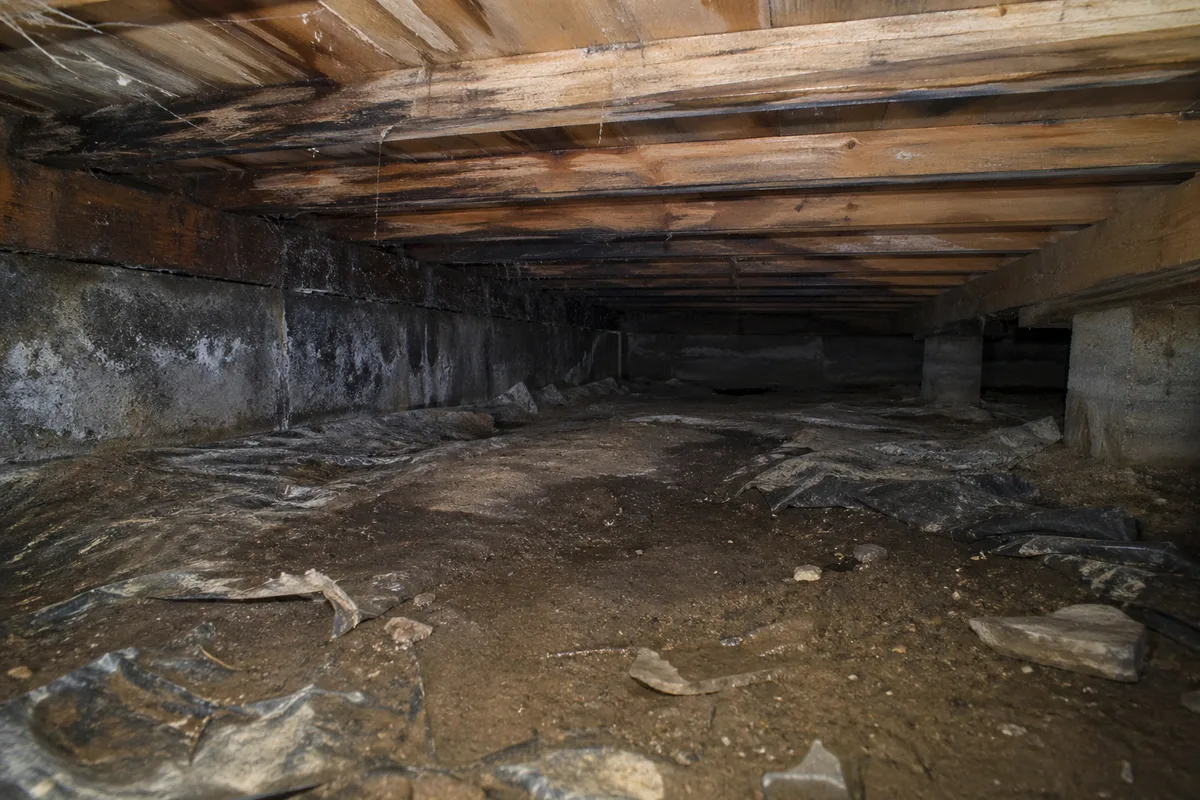
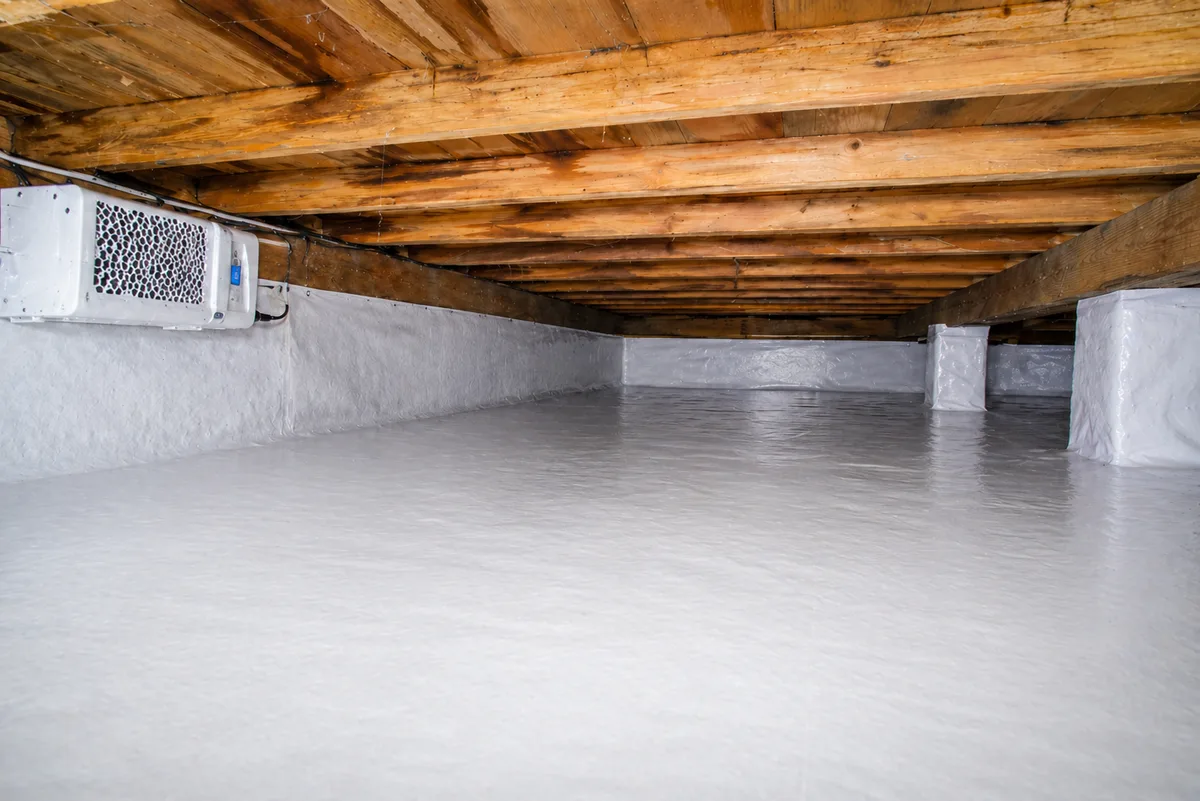
The Problem Encapsulation Solves
Many homes in the Southeast US are built on crawl spaces, a construction style common in humid climates. A traditional crawl space has vents in the foundation walls that were designed to let outside air circulate and carry moisture away. In theory, this works. In practice, in high-humidity climates, it does the opposite: warm, humid summer air flows in, hits the cooler surfaces of the crawl space, and condenses. The result is chronically high relative humidity - often 80–95% in summer months.
That level of sustained humidity causes:
- Mold and mildew growth on floor joists, subfloor, and insulation
- Wood rot in structural members
- Elevated indoor humidity throughout the home (affecting air quality and HVAC load)
- Pest pressure - termites, rodents, and insects prefer humid environments
- Higher heating and cooling bills
Encapsulation addresses all of these by eliminating the source: ground moisture and humid outside air entering the crawl space. For measured numbers on how much changes, and what does not, see our guide to crawl space encapsulation before and after.
What's Actually Included in Encapsulation
"Encapsulation" means different things to different contractors. A proper full encapsulation system includes:
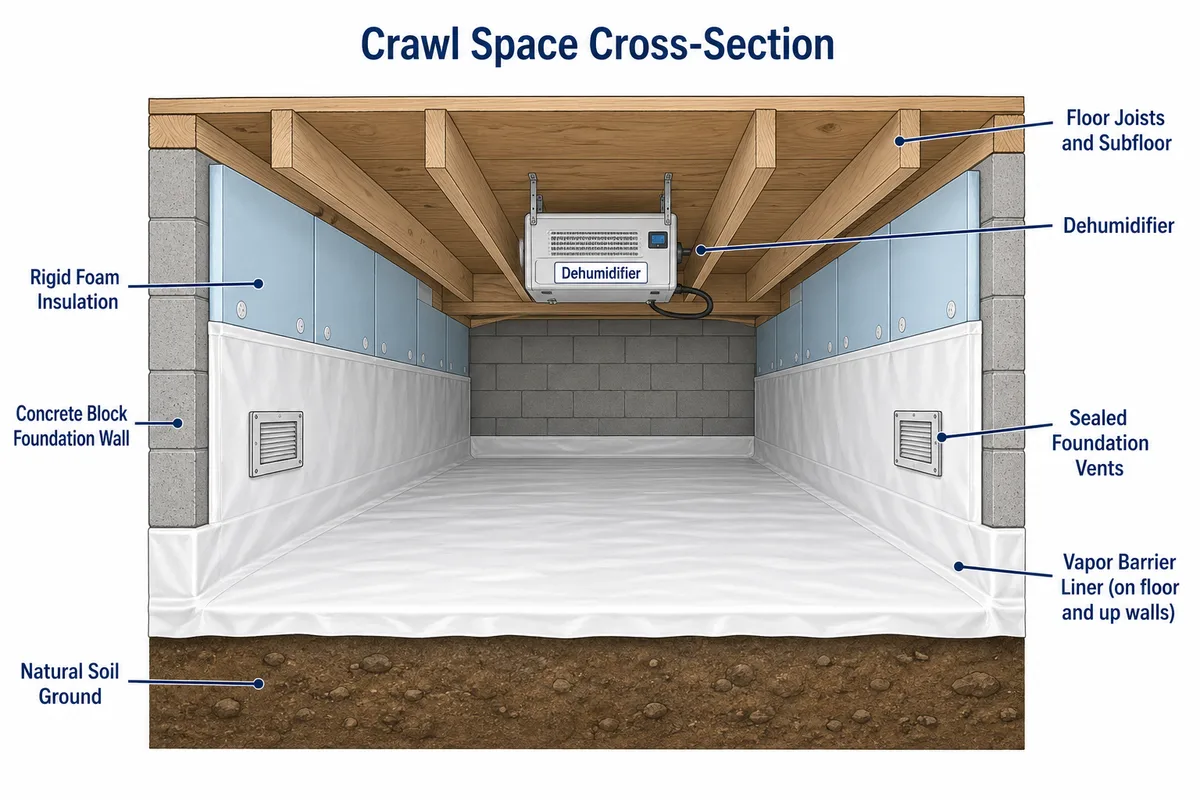
1. Vapor barrier (the liner)
The foundation of the system. A thick polyethylene sheet - typically 12 to 20 mil thickness - is laid across the entire crawl space floor and run up the walls, where it's mechanically fastened and sealed with butyl tape. The liner covers piers, pillars, and any other surfaces in contact with soil.
What "mil" means: 1 mil = 0.001 inch. A 6-mil liner (the thin plastic sold at hardware stores) is adequate only for temporary use. Residential encapsulation typically uses 12–20 mil reinforced liners. 20-mil is the most durable long-term option.
2. Sealed vents
Existing foundation vents are closed and insulated. This is counterintuitive - aren't those vents supposed to help? In humid Southern climates, the research is clear: closed, conditioned crawl spaces have significantly lower humidity and moisture damage than vented ones. Building Science Corporation lays out the case in BSI-009, "New Light In Crawlspaces", which explains why venting a crawl space in a humid climate imports moisture instead of removing it.
3. Dehumidifier
A commercial-grade dehumidifier - not a residential unit from a big-box store - is installed in the crawl space to actively maintain relative humidity below 60% year-round. That 60% ceiling is not arbitrary: the EPA's Brief Guide to Mold, Moisture and Your Home recommends keeping indoor relative humidity below 60%, and ideally between 30% and 50%, to control mold growth. The unit connects to a drain or condensate pump and runs continuously during humid months.
4. Wall insulation (optional but common)
Rigid foam board insulation installed on the interior foundation walls improves the thermal performance of the conditioned crawl space, reducing heat loss through the slab and improving energy efficiency.
5. Drainage system (if needed)
If there's active water intrusion - water entering through the walls or floor during rain events - drainage matting (dimple board) may be installed under or over the liner to direct water to a sump pit.
Crawl Space Encapsulation vs Vapor Barrier: What's the Difference?
| Feature | Vapor Barrier Only | Full Encapsulation |
|---|---|---|
| Plastic liner on floor | ✓ | ✓ |
| Liner sealed to walls | ✗ | ✓ |
| Foundation vents closed | ✗ | ✓ |
| Dehumidifier installed | ✗ | ✓ (recommended) |
| Active humidity control | ✗ | ✓ |
| Typical cost (1,500 sq ft) | $1,500–$3,500 | $5,500–$12,000 |
A vapor barrier alone reduces ground moisture but doesn't control the humidity entering through vented foundation walls. Full encapsulation treats the crawl space as a conditioned space - sealed, controlled, and maintained.
Who Actually Needs Encapsulation?
Not every crawl space needs full encapsulation. Here's a practical framework:
- High priority: Dirt-floor crawl space, humid climate (Southeast US), visible mold or wood rot, musty smell in living areas, high indoor humidity, pest activity
- Consider it: Existing but old or torn vapor barrier, elevated subfloor moisture readings (above 19% on a wood moisture meter), high energy bills without explanation
- May not need it: Concrete crawl space floor that stays dry, dry climates (the Southwest, high-elevation areas), very new construction with properly installed moisture control
The best way to assess your specific situation is a moisture reading taken in summer (when humidity is highest) and a visual inspection. If you have a contractor give you an inspection, ask them to show you the moisture readings, not just tell you the result.
How Long Does Encapsulation Last?
A properly installed 20-mil liner will last 25+ years with no maintenance. The dehumidifier requires annual filter cleaning and servicing every 3–5 years. The system as a whole should be visually inspected annually for any tears, standing water, or dehumidifier issues.
Most reputable contractors offer 10–25-year workmanship warranties. Liner manufacturer warranties vary by product - ask for the spec sheet.
Next steps
- → How much does encapsulation cost? - Full pricing guide
- → Estimate your project cost - Free calculator
- → Is crawl space encapsulation worth it? - ROI analysis
- → Can you DIY it? - Realistic difficulty assessment