Ideal Crawl Space Humidity Level: The Target Range, How to Measure It, and How to Hold It
The short answer: keep relative humidity in your crawl space between 50 and 60 percent year-round, and use 55 percent as your practical setpoint. That single number does most of the work of protecting the wood, the air, and the dehumidifier's runtime. This guide explains where the target comes from, how to measure it so the reading is trustworthy, and how to actually hold it - especially through a humid Southeast summer.
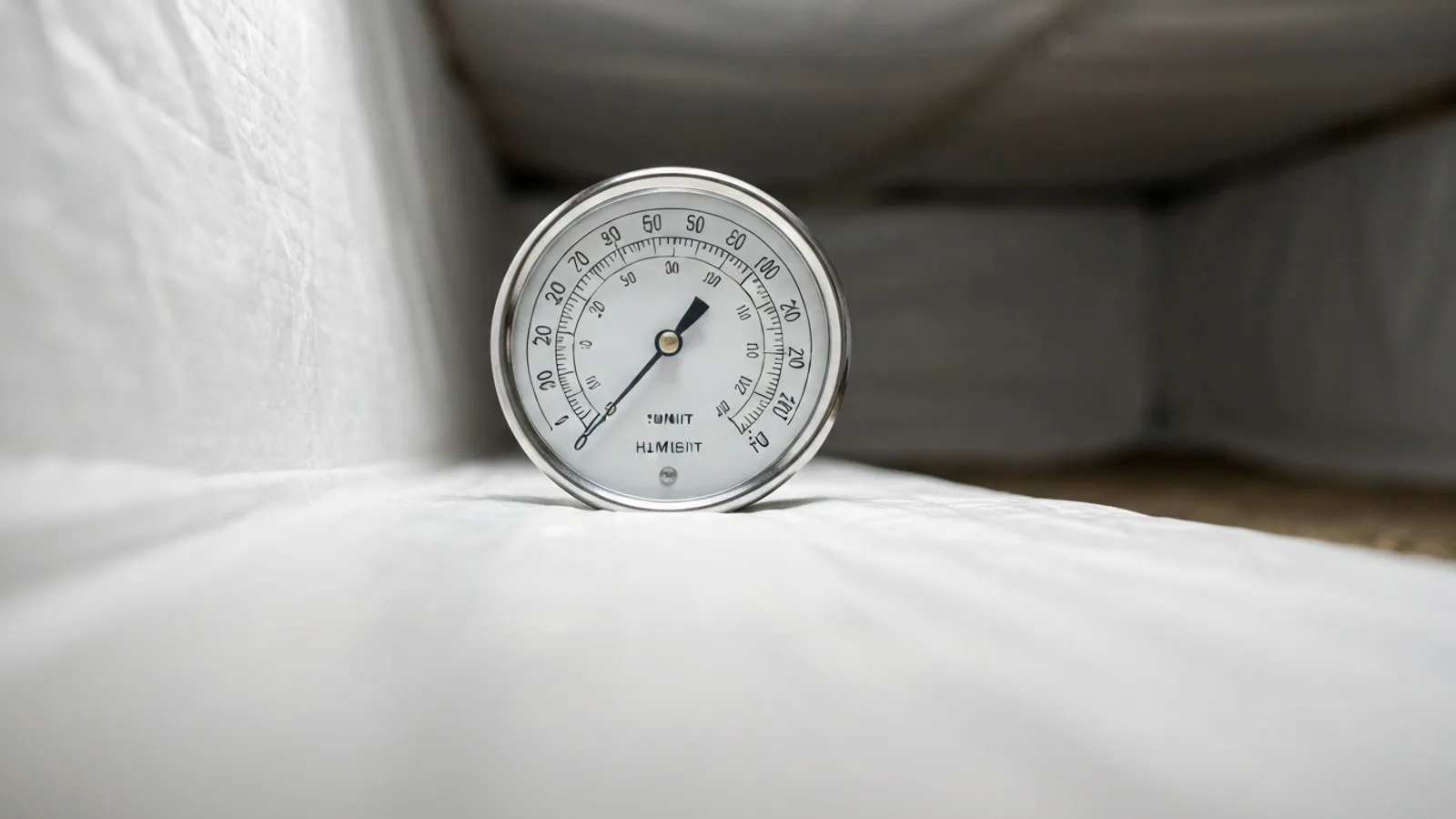
The Target: 50-60% Relative Humidity
The number that matters is relative humidity (RH), the percentage of moisture the air is holding relative to the most it could hold at that temperature. For a crawl space, the target is a band rather than a single figure: keep RH between 50 and 60 percent. The upper edge is the one to respect. The EPA recommends keeping indoor relative humidity below 60 percent, ideally between 30 and 50 percent, and ASHRAE and DOE building science guidance point to the same 60 percent ceiling for controlling mold and dust mites. That threshold applies to the crawl space because crawl space air moves up into the home through the stack effect.
Below 60 percent RH, mold cannot establish on dry wood surfaces, and dust mite populations drop off sharply. Controlling the moisture rather than treating the growth is the core principle in the EPA's mold guidance. That is why 55 percent is such a useful setpoint: it sits comfortably under the 60 percent line with margin to spare, so a normal daily swing in the crawl space will not push you into mold territory. Setting a dehumidifier to hold 55 percent also runs it less than chasing 45 percent would, which saves energy and extends the unit's life.
You do not need to drive the crawl space bone dry. Once you are reliably under 60 percent, pushing lower buys you very little in a wood-framed crawl space and mostly just adds runtime. The goal is a stable band, not the lowest possible reading.
What Happens at Each Humidity Range
Wood and mold respond to sustained humidity, not brief spikes. This table shows what a stable RH reading in each range means for the space:
| Relative Humidity | What It Means | Action |
|---|---|---|
| Under 50% | Dry - no mold or dust mite risk. Fine, but rarely necessary. | Raise dehumidifier setpoint to save energy |
| 50-60% | Target band. Wood stays below the decay threshold, mold cannot establish. | Hold here - this is the goal |
| 60-70% | Mold risk begins. Dust mites thrive. Wood starts absorbing moisture. | Find and fix the source; verify dehumidifier is working |
| 70%+ | Active mold growth and condensation on cold surfaces. Wood EMC climbs toward decay range. | Treat as a moisture problem, not a setpoint tweak |
If your reading sits in the top two rows, you are past the target-number question and into diagnosing a problem. Our guide to high crawl space humidity covers the causes and fixes for a space that stays above 60 percent, and the broader crawl space moisture guide covers bulk water and where it comes from.
Why Summer Is the Hard Season
In the humid Southeast, summer is when crawl space humidity is hardest to control - and it is counterintuitive. When warm, moisture-laden outdoor air enters a cool crawl space through open foundation vents, the air cools, its relative humidity climbs, and it can reach the dew point right on the cool surfaces of joists, ductwork, and pipes. That is why a vented crawl space in July can read 80 to 90 percent RH and show visible condensation even when it has not rained in weeks.
Winter is the easy season. Cold air holds little moisture, so RH in the crawl space tends to fall on its own. This is why a space can look fine in January and grow mold by August. When you judge whether your humidity control is working, judge it in the worst weeks of summer, not on a mild day in spring.
How to Measure It Correctly
A humidity target is only useful if the reading is trustworthy, and where you put the sensor changes the number. To measure crawl space RH correctly:
- Place the hygrometer in the middle of the crawl space, roughly midway between the walls, not tucked in a corner
- Keep it off the ground - set it on a joist, a block, or a shelf so it reads the general air, not the cool damp layer right at the liner
- Do not place it next to a foundation vent, an access door, or the dehumidifier's outlet - all three give you a local reading, not the room
- Let it sit for a full day before you trust it; hygrometers need time to equilibrate after being moved
A cheap wireless sensor that reports to your phone is worth far more than a single spot check with a handheld meter. Watching the reading over several days and through a weather change tells you whether the space holds its target or drifts up when it gets humid outside. Inexpensive wireless hygrometers cost $15 to $30, and running two - one near the dehumidifier and one at the far end - shows you whether humidity is even across the space. Stable humidity is one of the clearest signals of good crawl space air quality.
How to Hit and Hold the Target
Reaching 55 percent and staying there is a matter of doing things in the right order. Chasing the number with a dehumidifier before you have dealt with water and air leakage just runs the unit to death.
1. Fix bulk water first. Standing water, a leaking pipe, poor drainage, or downspouts dumping next to the foundation will overwhelm any dehumidifier. No humidity setpoint holds while liquid water is entering the space. Handle drainage and any active leaks before anything else - this is the foundation of the whole moisture control approach.
2. Seal the space. A vapor barrier over the soil stops ground moisture from evaporating into the air, and sealing the foundation vents stops humid summer air from flowing in. This is encapsulation, and it is what makes a stable target achievable. Without it, you are dehumidifying the outdoors.
3. Add a correctly sized dehumidifier. A sealed crawl space in a humid climate still needs active drying to hold below 60 percent through summer. The unit has to match the space - too small and it never reaches setpoint in July, too large and it short-cycles. See our crawl space dehumidifier sizing guide for how to match capacity to square footage, and the dehumidifiers overview for the unit types built for crawl spaces.
Done in that order, the space settles into a stable band and the dehumidifier only runs enough to defend the setpoint against summer humidity. Skip a step and the reading either never reaches target or bounces around with the weather.
What a Too-Low Reading Means
A reading below 45 percent is not dangerous, but it usually means the dehumidifier is set more aggressively than it needs to be. In a wood-framed crawl space there is no benefit to holding 40 percent over 55 percent, and the lower setpoint just adds runtime and wear. If your unit has a humidistat, raise the setpoint toward 55 percent and let it cycle less. The one exception is a space with stored items sensitive to dryness, which is uncommon in a crawl space.
Very low readings can also be a measurement artifact - a sensor sitting in the dehumidifier's dry outlet air reads lower than the room. Move the sensor to mid-space and confirm before you change any settings.
Troubleshooting a Reading That Will Not Drop
If the crawl space stays above 60 percent no matter what, work through these in order:
- Bulk water: Check for standing water, a leaking pipe, or water pooling under or on top of the vapor barrier. Liquid water beats any dehumidifier.
- Open or unsealed vents: An open foundation vent, a gapping access door, or an unsealed rim joist lets humid outdoor air pour in all summer.
- Dehumidifier not keeping up: Confirm the unit is running, the filter is clean, and the condensate line is draining. A clogged drain shuts many units off.
- Undersized unit: If the dehumidifier runs constantly and still cannot reach setpoint in peak summer, it is likely too small for the space.
- A gap in the vapor barrier: Exposed soil under a torn or incomplete liner keeps feeding moisture into the air.
A stubborn reading that survives all of the above usually points to a larger moisture source or an equipment mismatch. Our guides to high humidity and mold and mildew go deeper on diagnosis. If you would rather have it assessed and corrected, you can find a crawl space contractor in your area, and the cost calculator gives you a ballpark for encapsulation and a dehumidifier before you call.