How Long Does Crawl Space Encapsulation Take? A Day-by-Day Timeline
Most professional crawl space encapsulation jobs take one to three days from the crew arriving to the dehumidifier switching on. A clean, average-sized space can be done in a single day; a large space with standing water, mold, or structural repairs can stretch to a full work week. This guide breaks the timeline down by size and complexity, walks through what happens each day, and covers the factors that push a one-day job into a three-day one. If you actually meant how long the system LASTS once it is installed, that is a different question - see our guide on how long crawl space encapsulation lasts for lifespan and maintenance instead.
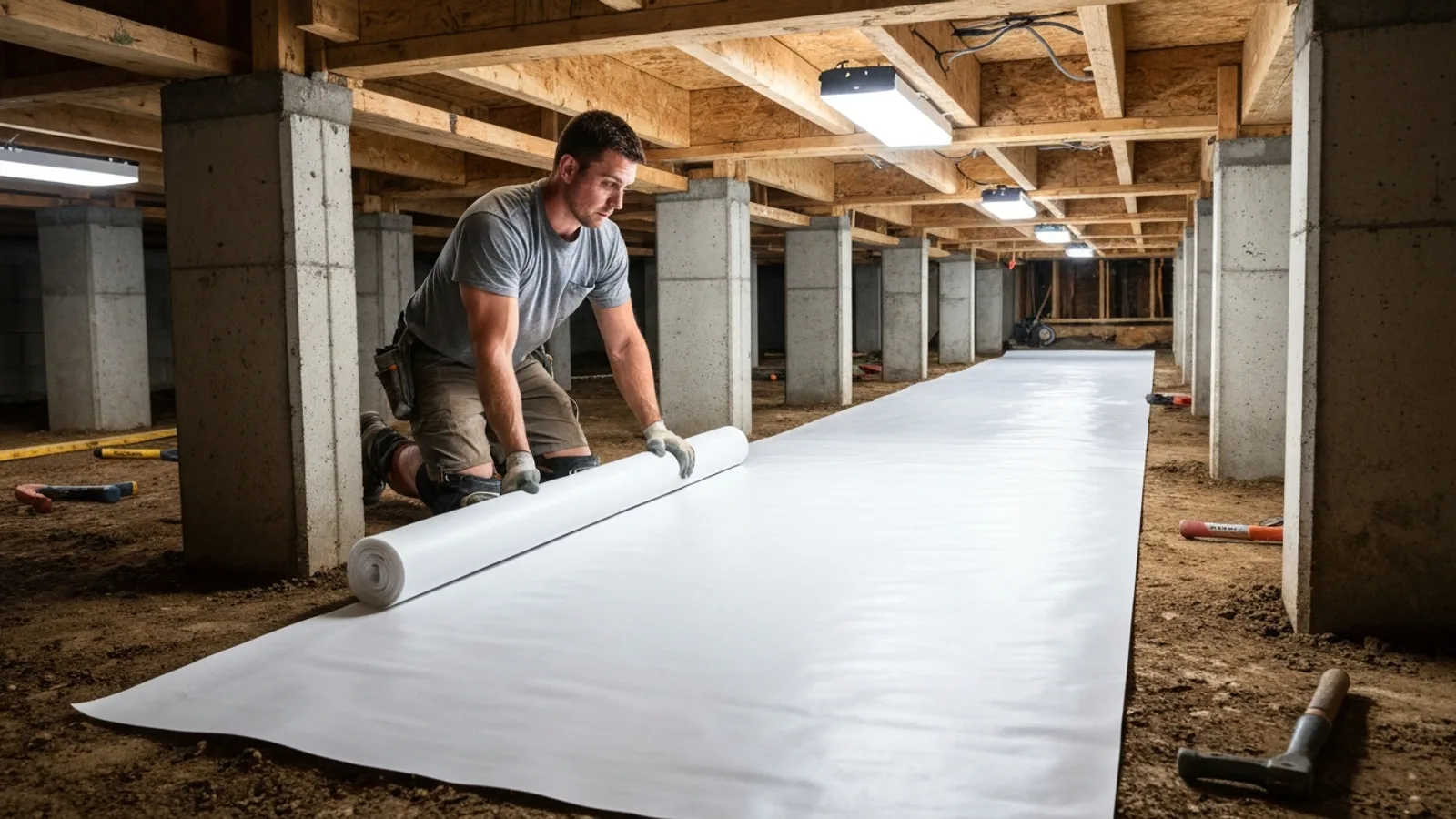
The Short Answer: 1 to 3 Days for Most Homes
The large majority of residential encapsulation jobs fall in the one to three day range. A single experienced crew of two to four people handles a typical project without needing to return. The work is physical and cramped rather than technically slow, so the main things that decide the length are square footage, how clean the space already is, and whether any problems have to be fixed before the liner goes down.
Here is roughly how the timeline scales with the space:
- 1 day: Small to average space (up to about 1,500 sq ft), dry floor, decent access, no repairs needed.
- 2 days: Larger space or one that adds a dehumidifier, minor grading, or vent and rim joist sealing.
- 3 to 5 days: Large space (2,500+ sq ft), or any job that includes drainage, a sump pump, mold remediation, or structural repair.
Timeline by Size and Complexity
| Crawl Space | Scope | Typical Duration | Crew Size |
|---|---|---|---|
| 1,000 sq ft | Clean, dry floor, liner + vent sealing only | 1 day | 2 people |
| 1,500 sq ft | Liner + wall insulation + dehumidifier | 1 to 2 days | 2 to 3 people |
| 2,000 sq ft | Liner, dehumidifier, minor debris cleanout | 2 days | 3 people |
| 2,500 sq ft | Full system plus interior drainage or sump pump | 3 days | 3 to 4 people |
| 2,500+ sq ft | Standing water drainage, mold remediation, joist repair | 3 to 5 days | 3 to 4 people |
| Any size | Very low clearance (under 18 in) or difficult access | Add 1 to 2 days | 3 to 4 people |
These are working days on site. If your job needs a permit inspection between stages (some drainage and electrical work does), add a day or two of waiting that is outside the crew's control. Our guide to encapsulation permits and code shows which parts of a job usually need one.
What Happens Each Day
A standard two to three day job follows a predictable order. The work has to happen in this sequence because each stage depends on the one before it being finished and dry.
Day 1: Prep, Cleanout, and Remediation
The first day is the messy one. The crew clears out old debris, torn plastic, and any existing insulation that is falling down. They grade the dirt floor if it is uneven, remove or address any standing water, and handle any mold and mildew that has to be treated before it gets sealed under the liner. This is also when a drainage trench and sump pit get dug if the job calls for them. On a clean, dry space this stage is short; on a problem space it can eat the entire first day on its own.
Day 2: Liner and Sealing
With the floor prepped, the crew rolls out and cuts the vapor barrier, overlapping seams and taping them, then running the liner up the foundation walls and fastening it with a termination bar. They seal the foundation vents, air-seal the rim joist, and insulate the walls if that is part of the scope. This is the stage most people picture when they think of encapsulation, and on an average home it is a full day of careful work. Our step-by-step encapsulation guide walks through exactly what this looks like.
Day 3: Dehumidifier and Drainage Finish
The final day is systems and cleanup. The crew sets and plumbs the dehumidifier, runs the condensate line to a drain or the sump, wires in power, and confirms the unit is pulling the space down toward its target humidity. Any drainage system or sump pump gets its final connections and a test cycle. The crew does a walkthrough, confirms seams and wall attachment, and cleans up. On a one-day job all of this is compressed into the same afternoon as the liner.
Factors That Extend the Timeline
A job that should take a day can turn into three or more once the crew opens up the space. The usual culprits:
- Mold remediation: Active mold has to be cleaned and treated before the liner goes down. Encapsulation seals a space; it does not kill existing mold. Remediation can add a day or more depending on how far it has spread.
- Standing water and drainage: If the space holds water, a drainage trench, drain matting, and a sump pump have to be installed first. This is the single biggest timeline extender and often the difference between a two-day and a five-day job.
- Structural repairs: Rotted joists, a sagging subfloor, or failed support posts have to be fixed before sealing. Repair work is its own project and can pause encapsulation entirely.
- Low clearance: Under about 18 inches of headroom, everything slows down because the crew cannot move efficiently. Expect an extra day on a tight space.
- Difficult access: A small hatch, an interior-only entrance, or a long carry from the truck limits how fast material moves in and debris moves out.
- Permit inspections: Some jurisdictions require an inspection of drainage or electrical work before it gets covered. That pause is days of calendar time even though it is no crew labor.
If any of these apply to your home, a good contractor will flag them during the site visit and quote a realistic multi-day timeline rather than promising a single day. When you compare quotes, use our contractor checklist to make sure the estimate accounts for prep and problems, not just the liner.
DIY Timeline: A Weekend to a Full Week
Doing it yourself takes longer than a professional crew, which is expected - you are one or two people learning as you go instead of a trained crew that does this daily. A realistic DIY schedule:
- Small, simple space: A long weekend (two to three days) for cleanout, liner, and vent sealing.
- Average space with a dehumidifier: Most of a week if you are working evenings and weekends around a job.
- Any space with water or mold: Longer, and worth reconsidering whether it is a DIY project at all.
The cleanout and liner work are the most DIY-friendly parts; drainage, electrical, and structural repair are where most people bring in help. Our DIY encapsulation overview covers what is realistic to take on and what to leave to a pro.
Do You Need to Be Home?
Usually not for the whole job. Most crews only need you present at the start to confirm scope and access and at the end for the walkthrough. Because the work happens under the house rather than in your living space, it is one of the less disruptive home projects. If the crew needs interior access to a hatch or has to run a condensate line to an interior drain, coordinate those windows ahead of time.
Can It Be Done Year-Round?
Yes. Encapsulation happens under the house, sheltered from weather, so it is not seasonal the way roofing or exterior work is. The one caveat is drainage: if you are installing a sump and drainage during a wet season, the crew may deal with more active water intrusion, which can slow the prep stage. Otherwise, any time of year works, and scheduling in an off-peak season can sometimes get you on the calendar faster.
Bottom Line
Budget one to three days for a typical professional job and up to a week for a large or problem-heavy space. The liner itself goes down quickly; it is the prep - water, mold, repairs, access - that decides your real timeline. Get a site visit before you assume a number, since the crew cannot see what is under your house from a phone quote. To pin down both time and price for your specific space, run the numbers with our cost calculator.
Related guides
- -> How long does encapsulation LAST? (lifespan, not install time)
- -> How to encapsulate a crawl space, step by step
- -> Dealing with standing water before encapsulation
- -> Which encapsulation work needs a permit
- -> How much does encapsulation cost?
- -> Get a free cost estimate
- -> Find a crawl space contractor